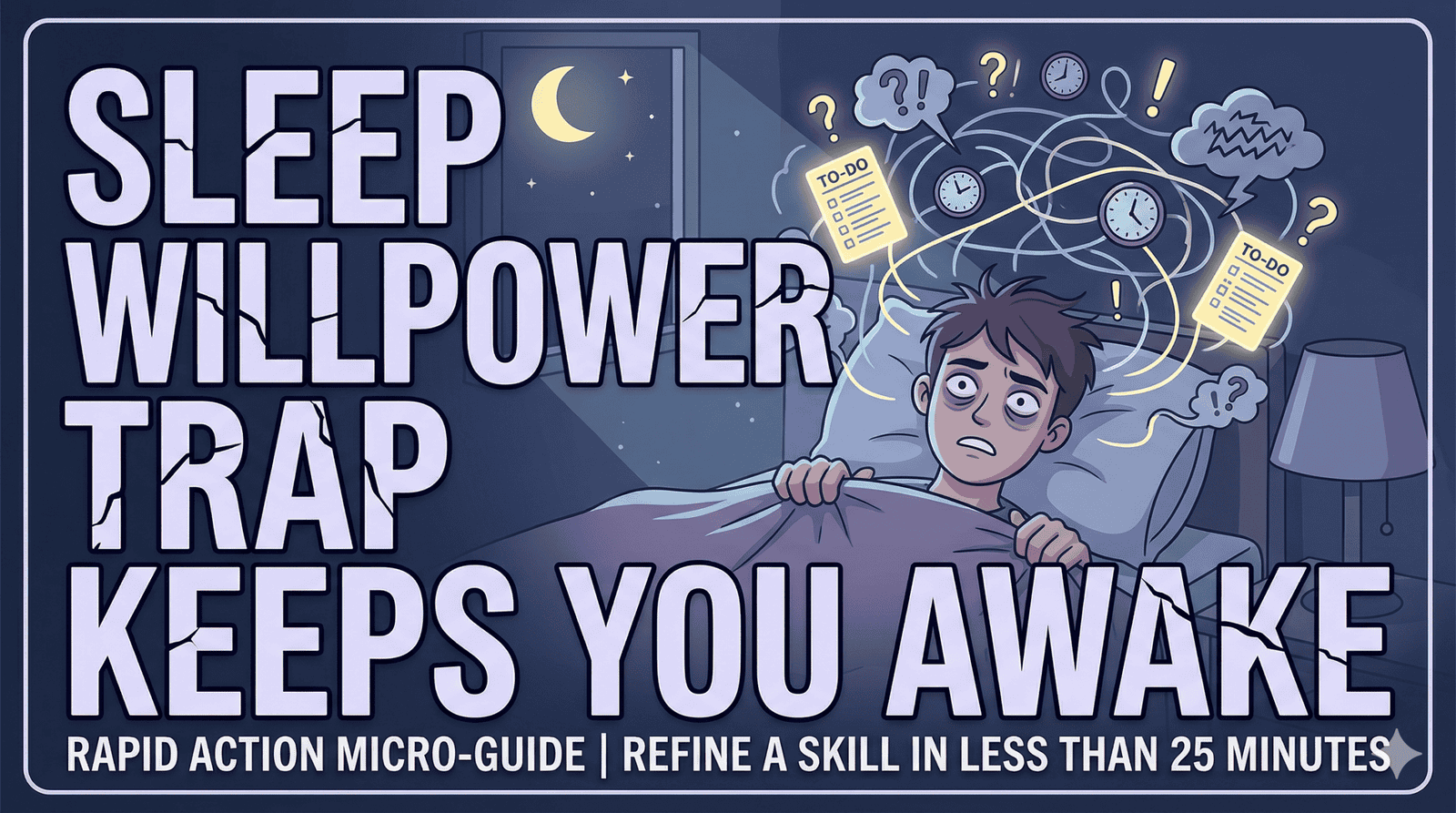

Approximately 30% of adults struggle to fall asleep, and the more they try, the more active their brains become. They often engage in doom-scrolling, check the clock, or panic about the next day. This turns the bed into a source of stress that prevents relaxation. This RAM incorporates CBT-I principles: reframing sleep as a form of permission rather than performance, breaking the link between bed and frustration with the 20-minute rule (get up if unable to sleep after 20 minutes), reducing clock-related anxiety through a Pressure Valve reframe, and using a quick 60-second physiological reset (relax shoulders, jaw, and exhale) to signal safety. When effort is removed, sleep tends to occur naturally.
By the end of this micro-course, you will be able to:
- Understand the science of hyperarousal and why “trying harder” to sleep actually keeps you awake (Paradox of Effort).
- Use the Mindset Shift (“Permission over Power”) and 20-Minute Reset Rule to break the “bed = stress” cycle backed by CBT-I research.
- Apply the Sleep Pressure Valve Worksheet with reframe statements and physical relaxation cues to take pressure off yourself tonight—creating conditions for natural sleep instead of forcing it.


Important Notice
This guide offers evidence-based techniques from CBT-I (Cognitive Behavioural Therapy for Insomnia) research to help manage sleep difficulties.
It is not medical advice and does not replace professional healthcare.
When to see a doctor or sleep specialist:
Chronic insomnia (difficulty sleeping 3+ nights/week for 3+ months)
Suspected sleep disorders (sleep apnea, restless leg, and narcolepsy)
Persistent sleep problems despite self-care efforts
Severe daytime impairment or mental health concerns
Sleep problems may have medical causes:
Thyroid issues, chronic pain, medication side effects, and other conditions require professional diagnosis.
In case of crisis:
If insomnia is accompanied by severe depression, anxiety, or thoughts of self-harm, contact a mental health professional or crisis helpline immediately.
These techniques are educational wellness practices. Individual needs vary. Seek professional guidance for chronic or severe sleep issues.